A reliable foundation does not begin when steel touches soil. It begins much earlier, in the manufacturing process, where every cut, bevel, pitch, fit-up, and weld determines how confidently a screw pile can perform once it is finally driven into the ground. That is the difference behind True Pitch Screw Piles: they are not just another steel foundation product; they are a manufactured system built around geometry, precision, and consistency.
For builders, engineers, contractors, and property owners, screw piles are often discussed in terms of installation speed. That matters, of course. A properly selected screw pile can be installed quickly, loaded immediately, and placed with minimal excavation compared with conventional concrete options.1 But focusing only on installation misses the most important point: the quality of the pile going into the ground determines the confidence you can have after it is installed.
At Inland Screw Piling, True Pitch Screw Piles are manufactured with a true helix design: the helix is pressed to form true-pitch flighting, maintaining a constant slope and a right angle to the pipe.1 That may sound technical, but the idea is simple. A better-formed helix is designed to advance cleanly, distribute load more evenly across the helix surface, and reduce unnecessary ground disturbance during installation.1 In other words, better manufacturing creates a better path to a stronger foundation.
A screw pile is only as dependable as the steel, shape, and workmanship built into it before it ever reaches the job site.
What Makes a True Pitch Screw Pile Different?
A helical pile generally includes three key components: a steel shaft, a helix, and an attachment or pile head.2 In practice, the helix is what allows the pile to behave like a large engineered screw, rotating into the soil rather than relying on excavation, forming, pouring, and curing. Industry sources describe helical piles as manufactured foundation systems with helical plates welded to a shaft, capable of being used in compression and tension applications depending on design requirements.3
The word true in True Pitch matters. A true-pitch helix is formed so the flighting has a consistent slope rather than an uneven, distorted, or “duck-bill” shape. Supplementary industry guidance emphasizes that true helix geometry supports more reliable capacity expectations because the pile advances in a controlled way as torque is applied.2 This is why manufacturing accuracy is not just a cosmetic detail. It is part of the product’s performance story.
| Manufacturing feature | Why it matters in the field |
| Pressed true-pitch flighting | Helps maintain consistent helix geometry and controlled advancement through soil. |
| Constant slope across the helix | Supports more even load distribution across the helix surface. |
| Right-angle relationship to the pipe | Helps create accurate alignment between shaft and helix. |
| High-definition cut | Improves fit-up to the pipe before welding. |
| Beveled leading edge | Helps the pile cut cleanly through frozen or dense soils with reduced slippage. |
| Consistent weld quality | Creates a stronger, more repeatable connection between helix and shaft. |
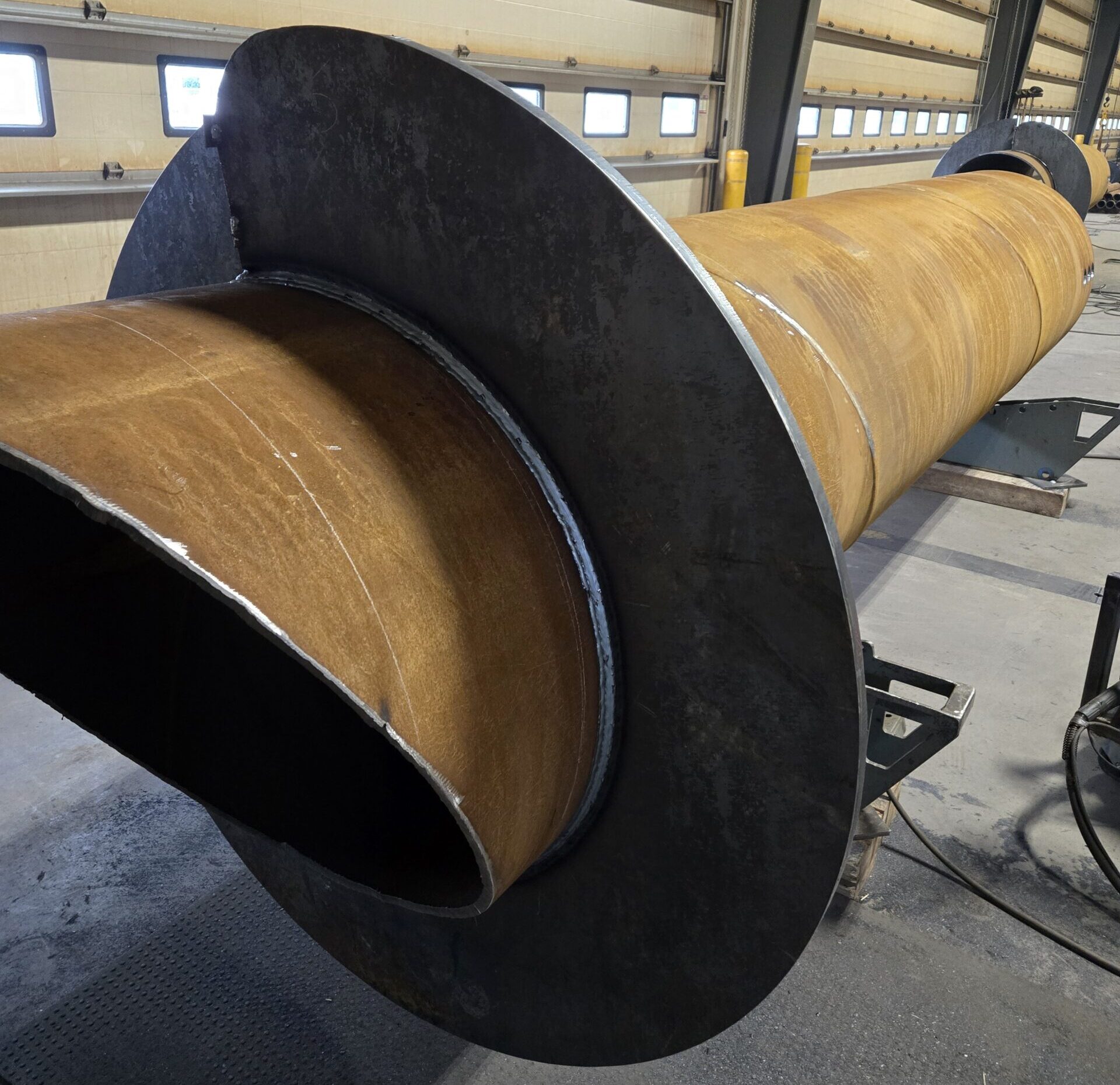
Inland’s True Pitch Screw Piles are available in 4-inch to 14-inch pitch formations, allowing the helix geometry to be matched to project requirements.1 The helix features a beveled leading edge to cut cleanly through frozen and dense soils, while a high-definition cut supports precise fit-up to the pipe and helps produce strong, consistent weld quality.1 Those are manufacturing decisions with real field consequences.
The Foundation Starts in the Shop
On a job site, a screw pile may look like a simple piece of steel. In the shop, however, it is a sequence of controlled manufacturing steps. Steel must be cut cleanly. The helix must be formed to the intended pitch. The plate must fit the shaft precisely. The weld must be consistent. Each step affects how the finished pile installs, how it transfers load, and how repeatable the product is from one pile to the next.
This is why manufacturing deserves more attention. Installation can verify torque and placement, but the installed performance begins with a product that has already been shaped correctly. A poorly formed helix may still rotate into the ground, but it may not behave the same as a true helical shape. Industry commentary notes that a true helix screws into the soil with minimal disturbance rather than acting like an auger that excessively disrupts the surrounding ground.3
For Inland, the manufacturing focus is clear: create a pile that is designed for clean installation, accurate fit-up, and dependable load transfer. True Pitch Screw Piles use engineered steel shafts with welded helix plates, and Inland notes that the helix plates are spaced at three times the plate diameter.1 That spacing is consistent with broader industry guidance that helical plates should be spaced far enough apart to function independently as bearing elements.3
Why Helix Geometry Matters
A helix is not just a round plate welded to a pipe. It is a working surface. As the pile rotates, the helix draws the shaft into the ground, much like a screw advances into wood.4 If the helix is formed consistently, the pile can advance more predictably. If it is not, the pile may disturb more soil than necessary or lose some of the installation efficiency that makes screw piles valuable in the first place.
True-pitch geometry is especially important because screw pile performance is closely associated with controlled advancement and torque verification. Foundation Technologies notes that helical piles offer built-in quality control through real-time tracking of torque-to-capacity ratio during installation.3 That installation verification becomes more meaningful when the pile itself is manufactured with repeatable geometry.
| Product attribute | Manufacturing impact | Customer benefit |
| Repeatable pitch | Reduces variation from pile to pile. | More predictable installation and performance. |
| Clean leading edge | Improves penetration through challenging soils. | Less slippage and smoother advancement. |
| Precise fit-up | Supports better weld consistency. | Stronger connection between helix and shaft. |
| Engineered plate spacing | Helps helices act as bearing elements. | Better load transfer through the foundation system. |
| Steel construction | Creates a manufactured alternative to poured concrete. | Immediate loading, removability, and reduced site disruption. |
The result is a product designed to do more than “go into the ground.” It is designed to bite, advance, and hold with consistency.
Built for Real-World Soil Conditions
Western Canadian projects often face conditions that do not wait for perfect weather. Frozen ground, dense soils, variable sites, and tight schedules can all put pressure on a foundation plan. This is where the details of True Pitch Screw Pile manufacturing become especially valuable.
A beveled leading edge is not an aesthetic feature; it is a working edge. Inland’s helix design is built to cut cleanly through frozen and dense soils while reducing slippage during installation.1 That means the pile is manufactured with the realities of the job site in mind, not just the design table.
The same applies to high-definition cutting and fit-up. When the helix fits tightly and accurately to the pipe, the weld can be more consistent. Consistent weld quality matters because the helix and shaft must work together as one foundation element. In a product designed to transfer structural loads into soil, the connection between parts is not a secondary detail. It is central to the system.
More Than Residential: A Manufactured Foundation System for Serious Applications
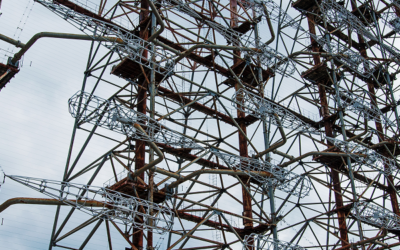
True Pitch Screw Piles can support a wide range of projects, including residential, commercial, industrial, energy, and infrastructure applications.1 Inland’s project examples include transmission tower foundations, utility and power grid infrastructure, and solar farm structures.1 Those applications demand more than convenience. They demand foundation products that are consistent, adaptable, and built for performance.
Screw pile systems are also versatile because they can connect to many different structural components, including caps, brackets, tiebacks, and related attachments.1 This makes them useful in projects where the foundation must integrate with a specific structure rather than simply act as a generic support point.
| Application area | Why True Pitch manufacturing matters |
| Residential foundations and additions | Clean installation, minimal disturbance, and immediate load-bearing can help keep projects moving. |
| Commercial structures | Repeatable pile manufacturing supports consistent product performance across multiple foundation points. |
| Industrial projects | Steel foundation systems can be adapted to demanding loads and site conditions. |
| Utility and power infrastructure | Screw piles can reduce vibration, excavation, and disruption in restricted-access environments. |
| Solar farm structures | Rapid deployment and precise alignment can support efficient installation across repeated foundation points. |
In every case, the manufacturing story remains the same: the better the pile is made, the more confidence the project team can have when it is time to build on it.
True Pitch Screw Piles vs. Concrete: The Manufacturing Advantage
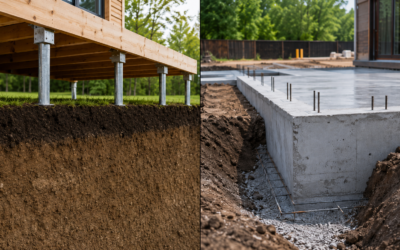
Concrete foundations are familiar, but they come with practical limitations. They often require excavation, forming, pouring, curing, and soil removal. Screw piles, by contrast, can be installed in hours, do not require curing time, and can support immediate loading when properly installed and verified.1
That comparison is usually framed as an installation advantage, but it is also a manufacturing advantage. A screw pile arrives as a finished steel foundation product. Its geometry, shaft, helix, edge, fit-up, and welds have already been created before the job begins. This allows the job site to become a place of placement and verification rather than forming and curing.
| Foundation consideration | True Pitch Screw Piles | Traditional concrete foundations |
| Manufacturing control | Manufactured steel product with formed helix, precise fit-up, and welded components. | Often formed and poured on site, subject to weather, curing, and site conditions. |
| Installation timeline | Installed quickly with no curing time.1 | Requires excavation, forming, pouring, and curing.1 |
| Site impact | Minimal excavation and reduced ground disturbance.1 | More soil removal, disruption, and site cleanup.1 |
| Load readiness | Immediate load-bearing with torque verification.1 | Load applied after curing.1 |
| Adaptability | Removable and adaptable for future changes.1 | Permanent and difficult to modify or remove.1 |
For many projects, the appeal is clear. True Pitch Screw Piles combine the efficiency of a steel foundation system with the confidence of controlled manufacturing.
The Inland Difference: Precision You Can Build On
The most compelling thing about True Pitch Screw Piles is not that they are fast. It is that they are made with intention. The true-pitch flighting, constant slope, right-angle relationship to the pipe, beveled leading edge, and high-definition fit-up all point to one larger philosophy: foundations should be built with precision before they are installed with precision.
That is why Inland’s True Pitch Screw Piles deserve attention from builders and project owners who want more than a quick foundation option. They are designed for projects where speed matters, but reliability matters more. They are manufactured for the realities of dense soils, frozen conditions, repeatable installation, and structural confidence. They are a reminder that what happens in the fabrication shop can shape the success of everything built above grade.
When the helix is right, the pile advances differently. When the fit-up is clean, the weld can be stronger and more consistent. When the pitch is true, the foundation has a better chance to perform the way it was designed to perform.
That is the promise of True Pitch Screw Piles: better geometry, better manufacturing, and a better foundation from the very first turn.
Ready to Build on a Better-Made Foundation?
If your project needs a foundation solution that is fast, precise, adaptable, and manufactured with care, Inland Screw Piling’s True Pitch Screw Piles are built to deliver. Whether you are planning a residential build, a commercial structure, an industrial project, utility infrastructure, or solar support system, the right foundation starts with the right pile.
Talk to Inland Screw Piling about True Pitch Screw Piles and find out how precision-manufactured steel foundations can support your next project.
References
Footnotes
1.Inland Screw Piling, “True Pitch Screw Piles.” https://inlandscrewpiling.com/true-pitch-screw-piles/ ↩ ↩2 ↩3 ↩4 ↩5 ↩6 ↩7 ↩8 ↩9 ↩10 ↩11 ↩12 ↩13 ↩14 ↩15 ↩16 ↩17 ↩18 ↩19
2.Helical Pile World, “Why All Helical Piles Aren’t Made the Same.” https://helicalpileworld.com/goliathtech_all_piles_not_same.html ↩ ↩2
3.Foundation Technologies, “CHANCE® Helical Piles Foundation Anchor System.” https://www.foundationtechnologies.com/products/chance-helical-piles/ ↩ ↩2 ↩3 ↩4
4.GoliathTech, “What is a helical pile? Discover why it’s the #1 choice for entrepreneurs.” https://www.goliathtechpiles.com/what-is-helical-pile ↩