Solar development timelines are tight, and the foundation phase is often where projects lose the most time. Racking systems need a fast, reliable, and precisely engineered foundation across large sites with variable terrain, and that’s exactly where a screw pile foundation has an advantage over poured concrete.
Here’s why screw pile foundations have become a standard choice for solar farm developers and EPCs.
Why Foundation Choice Matters for Solar Projects
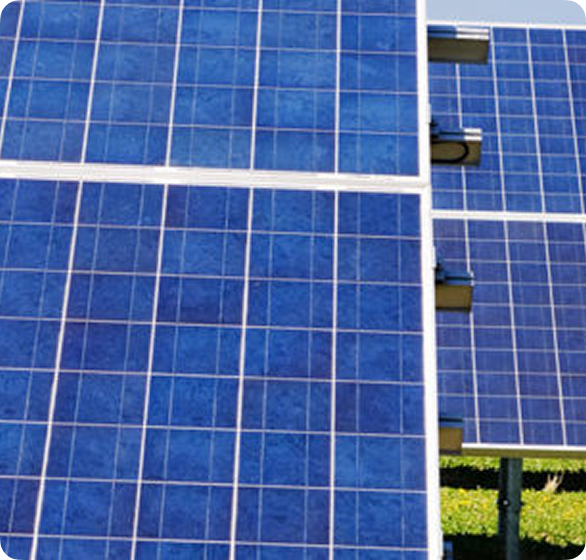
A solar farm isn’t one foundation, it’s hundreds or thousands of them, each supporting a racking post that has to be installed at a precise depth, angle, and load capacity across an entire site. Any delay or inconsistency at the foundation stage multiplies across the whole project. Choosing a foundation system that installs quickly and consistently, at scale, has a direct impact on the project’s overall timeline and cost.
Speed to Energization
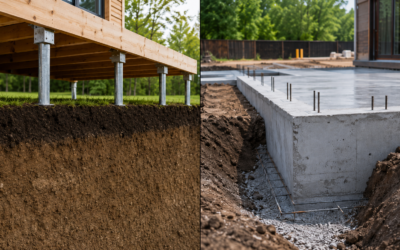
Every day between site mobilization and energization matters on a solar project. A screw pile foundation reaches full load-bearing capacity immediately after installation, with no curing time and no waiting on weather. That means racking and panel installation can follow directly behind the piling crew, rather than waiting on a concrete cure schedule that can add weeks to the project.
Working Across Variable Terrain and Soil
Solar sites are rarely uniform. A single project can span multiple soil types, moisture conditions, and grades across its footprint. Screw piles adapt to these variations without the need for extensive site grading or preparation that a concrete foundation program often requires. That flexibility helps keep large, multi-acre installations on schedule without reworking the foundation plan for every soil condition encountered.
Verifiable, Engineered Load Capacity for Racking Systems
Racking systems depend on consistent, documented foundation capacity across the entire array. Screw pile installation torque is monitored in real time as each pile is driven, producing a field-verified capacity record for every single pile, not just a sample set. For a project with thousands of foundation points, that level of documentation is difficult to match with poured concrete.
Minimal Site Disturbance
Many solar projects are sited on agricultural land or in areas with environmental review requirements. Screw piles install with compact equipment, without excavation, spoil removal, or concrete trucks moving across the site. That reduces ground disturbance significantly compared to a concrete foundation program, a factor that increasingly comes up in permitting and landowner agreements. Screw piles can also be removed at end-of-life or if a site’s use changes, which supports decommissioning and land reclamation requirements that solar leases often include.
Built for Alberta’s Climate
Solar construction doesn’t always happen in ideal weather. A screw pile foundation installs in frozen ground and year-round conditions that would stop a concrete pour entirely, which gives project schedules more flexibility around Alberta’s shorter construction windows and unpredictable weather.
What to Look for in a Screw Pile Foundation Supplier for Solar
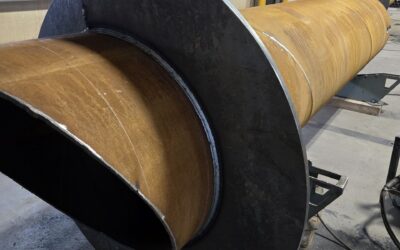
Not every screw pile is manufactured to the same standard, and for a project with thousands of foundation points, consistency matters as much as speed. Inland Screw Piling manufactures True Pitch™ helix screw piles in-house at our Coaldale, AB facility, using a true helix design with a consistent pitch and right-angle relationship to the pipe, backed by CWB-certified welding and ISO 9001:2015 quality management. That means every pile on your site performs the way it was engineered to, at the scale a solar project demands.
If you’re planning a solar project in Alberta and evaluating foundation options, our team can help assess whether a screw pile foundation fits your site conditions and timeline.