Every construction project starts with the same question: what’s going into the ground first. For decades, that answer was almost always concrete. Today, more engineers, contractors, and project owners across Alberta are specifying a screw pile foundation instead — and the reasons come down to speed, soil conditions, and verifiable performance.
If you’re weighing a screw pile foundation against a traditional poured concrete foundation for your next project, here’s an honest, practical breakdown of how the two compare.
How a Screw Pile Foundation Works
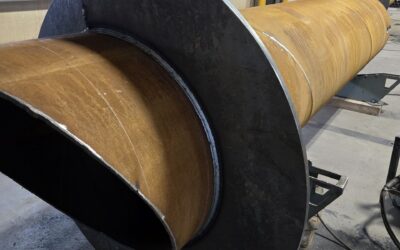
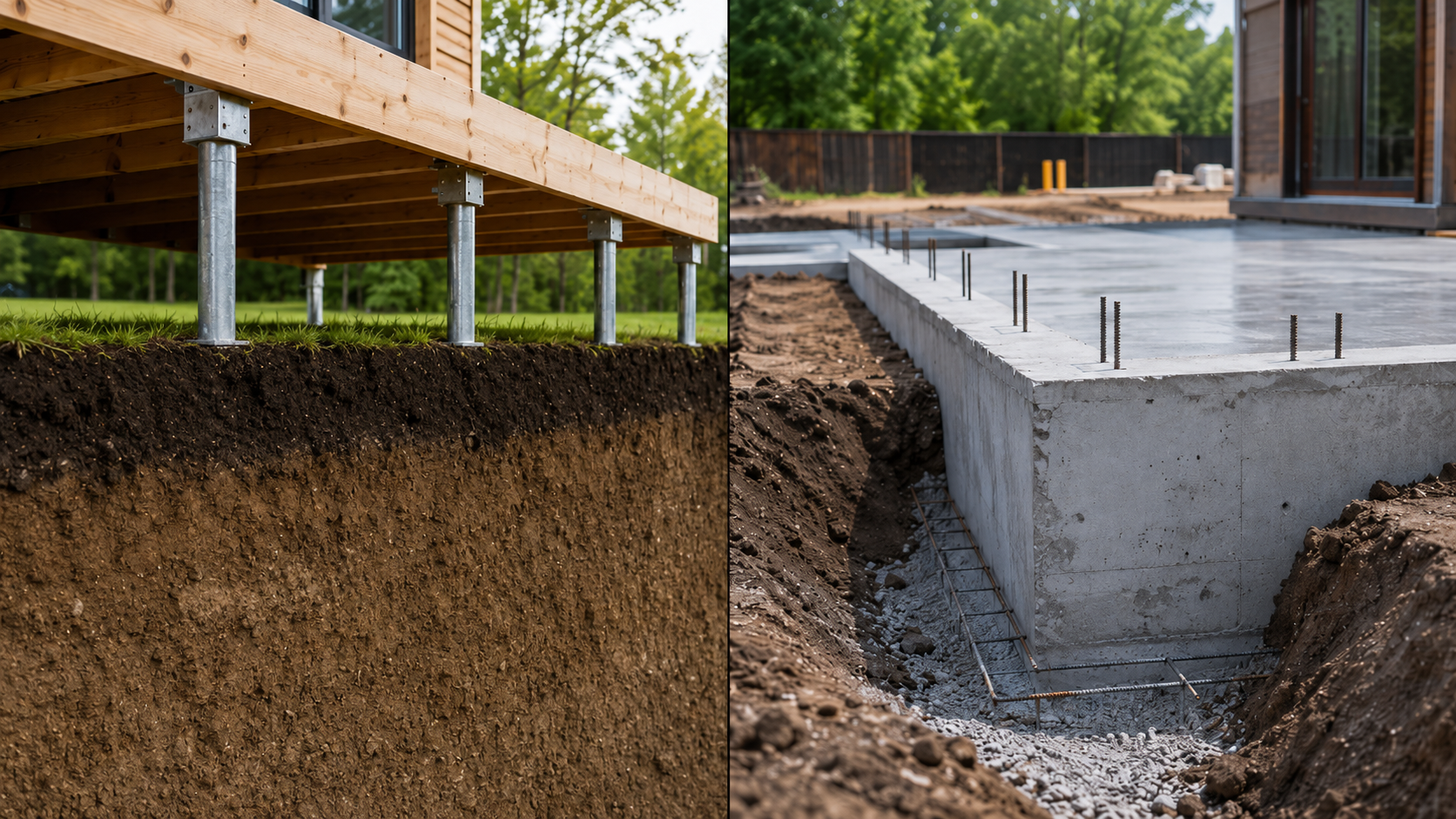
A screw pile foundation uses engineered steel shafts with helical bearing plates — the “helix” — welded along the length of the pile. A hydraulic torque head rotates each pile into the ground, similar to driving a large screw. There’s no excavation, no forming, and no concrete to pour or cure.
Concrete foundations, by contrast, require excavation, formwork, reinforcement, a concrete pour, and a curing period before the structure above can bear load.
Installation Speed and Timeline
This is where the gap is widest. A screw pile foundation reaches full load-bearing capacity the moment it’s installed to the specified torque — there’s no curing time. Most projects move from pile installation straight into construction the same day.
Concrete needs time to cure before it can safely carry load, which can add days or weeks to a project timeline depending on the pour size, temperature, and specification. On projects with tight schedules or seasonal deadlines, that difference alone can determine which foundation type makes sense.
Performance in Alberta’s Climate and Soil Conditions
Alberta’s frost depth, freeze-thaw cycles, and variable soil conditions are hard on concrete. Poured foundations are vulnerable to frost heave if not installed below frost depth, and cold weather can slow or halt concrete work entirely during the winter months.
A screw pile foundation installs year-round, including in frozen ground, and isn’t subject to the same curing-related weather restrictions. For projects that can’t wait for a weather window, that’s a meaningful advantage, especially in some areas of Southern Alberta.
Verifiable Load Capacity
One thing that often gets overlooked in the comparison: a screw pile foundation gives you a real-time, field-verified record of load capacity. Installation torque is monitored as each pile is driven, producing documented proof that the specified capacity has been reached — pile by pile.
Concrete doesn’t offer the same real-time verification. Strength testing typically relies on cylinder breaks and time-based curing assumptions rather than a direct, in-field capacity reading for each foundation point.
Site Impact and Reusability
Screw piles are installed with compact equipment, with no excavation, spoil removal, or concrete trucks required. That means less site disturbance — a real consideration on environmentally sensitive sites, restricted-access locations, or projects where minimizing ground disturbance is part of the approval process.
Screw piles can also be removed if a project’s requirements change, which isn’t an option with poured concrete. For temporary or modular structures, that reusability is a practical advantage concrete simply can’t match.
When Concrete Still Makes Sense
To be fair to the alternative: concrete remains a proven, well-understood foundation solution, and for some project types — very large permanent structures with certain load configurations, for instance — it may still be the right specification. The right choice always comes down to soil conditions, load requirements, timeline, and site access. A qualified engineer should assess the specifics of your project before any foundation type is finalized.
Choosing the Right Screw Pile Foundation Partner in Alberta
Not all screw piles are built the same way. Inland Screw Piling manufactures True Pitch™ helix screw piles in-house at our Coaldale, AB facility, using a true helix design — a consistent pitch and right-angle relationship to the pipe — that most third-party suppliers can’t match. That means tighter tolerances, more predictable load capacity, and a product backed by CWB-certified welding and ISO 9001:2015 quality management.
If you’re planning a project in Alberta and weighing your foundation options, our team can walk you through whether a screw pile foundation fits your soil conditions, timeline, and load requirements.
If you’re unsure what’s best for your situation, please give us a call today at 403-345-6781.